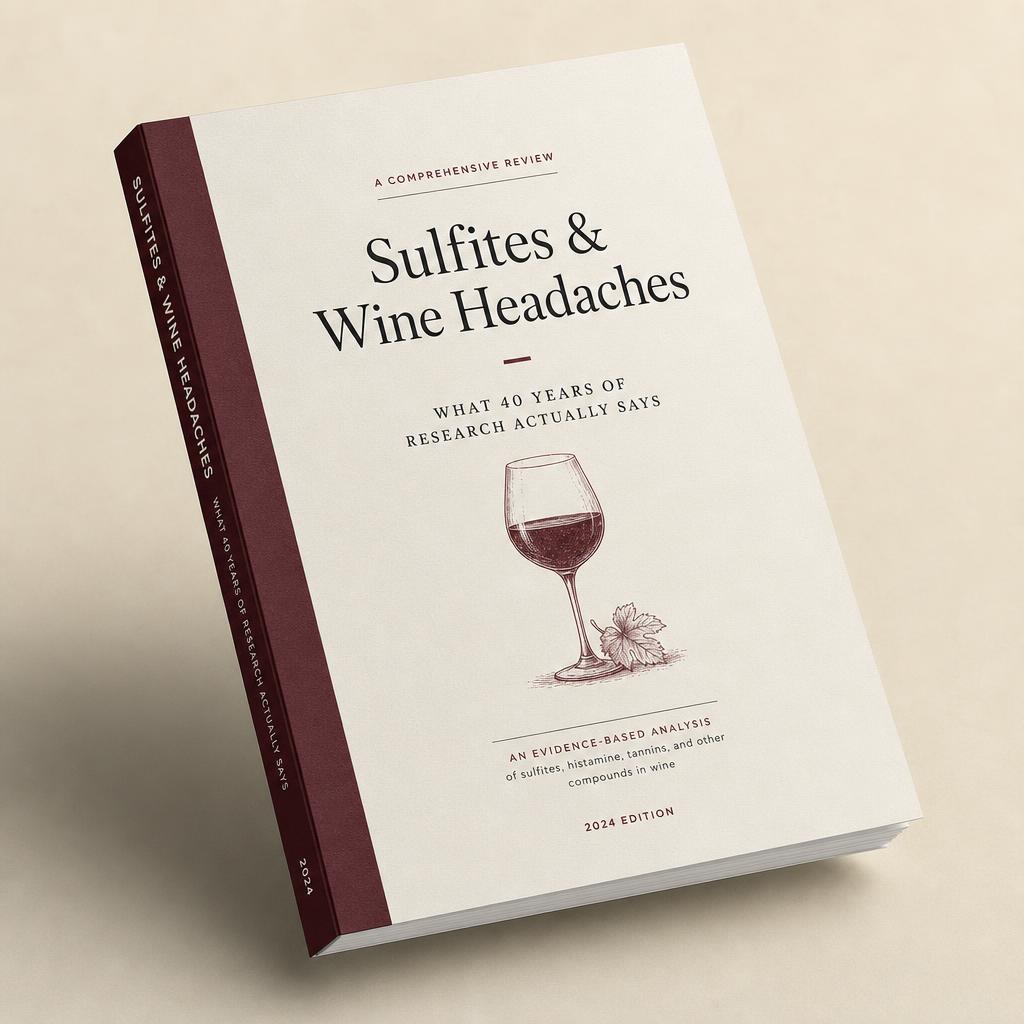
what 40 years of research actually says
Almost everyone blames sulfites for their wine headache. The science doesn't. This 3,500-word evidence-led paper walks through the regulatory thresholds, the real suspects (quercetin, histamine, congeners), and the variables a home winemaker can actually control.
- ~3,500 words, fully cited
- Mayo Clinic, AAAAI, FDA/TTB, OIV, UC Davis sources
- Sulfite-level comparison tables (wine vs. dried fruit vs. shrimp)
- Practical guidance for sensitive drinkers
No spam. One email, the paper attached.
The science
What sulfites actually are, why yeast makes them, and what the regulatory thresholds in the US and EU really mean.
The real suspects
Quercetin and the 2023 UC Davis ALDH2 hypothesis, biogenic amines, congeners, tannins, and dehydration.
What you can control
Why home winemaking changes the variables that the research actually points at — freshness, varietal, additions, time-to-glass.
"Despite the popular belief, scientific studies have not shown a clear link between sulfites in wine and headaches in most people. Sulfites can trigger asthmatic reactions in a small subset of patients, but they are an unlikely cause of the classic red-wine headache."
— Adapted from the Mayo Clinic consumer health summary on sulfite sensitivity
Get the full paper.
Drop your email and we'll send you the PDF. We'll also let you know when we publish the next one. That's it.
PDF · ~3,500 words · ~12 pages
Prefer the web version? Read the long-form blog post →