November 25, 2025 · 6 min read
One of them you made. The other one you didn't. That changes everything before the first sip.
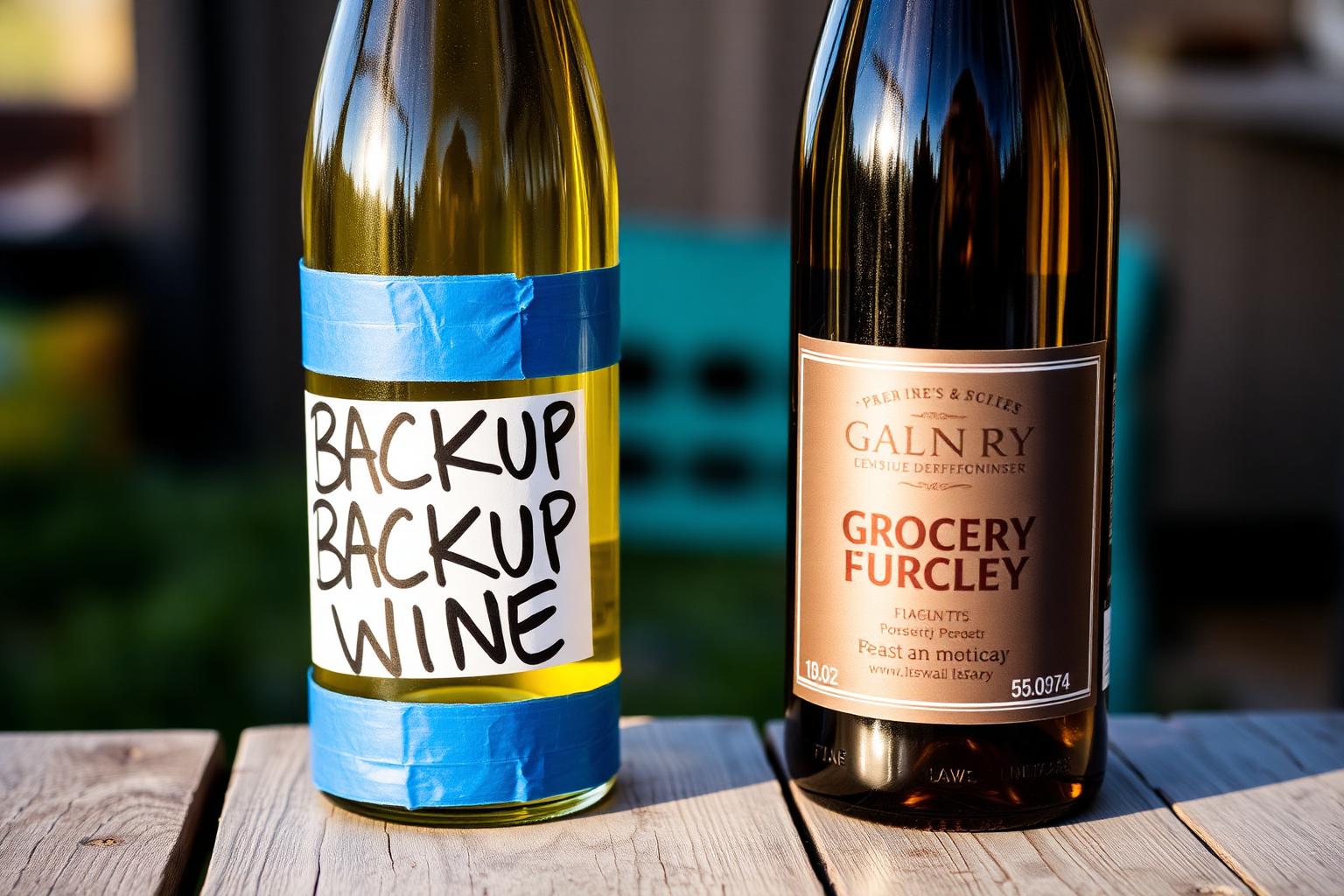
Let's get the obvious thing out of the way. A nine-dollar bottle of grocery store wine, made by people whose entire job is making wine, in a facility designed for making wine, will almost always be more technically refined than a kit wine you made in your basement. The grocery wine has consistency. It has predictability. It has a marketing budget.
And it will still lose. Almost every time. To a wine you made yourself. And here is the thing nobody admits — the reason it loses has very little to do with the wine in the glass.
The unfair part
When you pour a glass of wine you made, you are not just tasting wine. You are tasting six weeks of waiting. You are tasting the Saturday afternoon you spent racking it. You are tasting the slightly stupid label you stuck on the bottle at 11pm. You are tasting the conversation you had with your friend while you were stirring the primary fermenter.
Grocery store wine has none of that. It has a cardboard sleeve, a barcode, and a sticker that says it pairs with chicken. It is wine. It is fine. But it has nothing on it.
OK but how does it actually taste
Real talk. A good kit, made carefully, will produce a wine that lands somewhere in the eight to fourteen dollar grocery wine range in straight blind tasting. Not the twenty-five dollar tier. Not the four dollar tier. Solidly in the middle of the supermarket aisle. That is the honest answer.
Higher-end kits — the eighteen-liter premium grape juice ones — can absolutely punch above that, into the twenty-five to forty dollar range, especially after a year of aging. We have made batches of those that people genuinely thought we'd uncorked from a bottle they brought back from a vineyard trip. We did not correct them. That's between us and the wine.
Cost per bottle, since you'll ask
A typical four-week kit makes about thirty bottles for a hundred and twenty dollars in juice, plus roughly forty dollars amortized in equipment over the first year. Call it five-fifty a bottle. The same wine at the grocery store is twelve. So yes, it's roughly cheaper. But that's not why you do this. You do this because the bottle on your dinner table tonight has your handwriting on it.
“I'd rather drink a six dollar bottle I made than a sixteen dollar bottle I picked up on the way home. Every single time.”
The point of the comparison
There is no real winner here. Grocery wine is fine. Kit wine, made well, is great. The unfair part is that one of them sat in a truck for nine months and one of them sat in your basement while you were down there. That difference doesn't show up on a flavor wheel. But it shows up the second you pour the glass.
ShortcutSee Russ's full beginner supply bundle — every item, best price.