November 18, 2025 · 8 min read
What the box doesn't tell you, what we wish we'd known, and the one step nobody should skip.
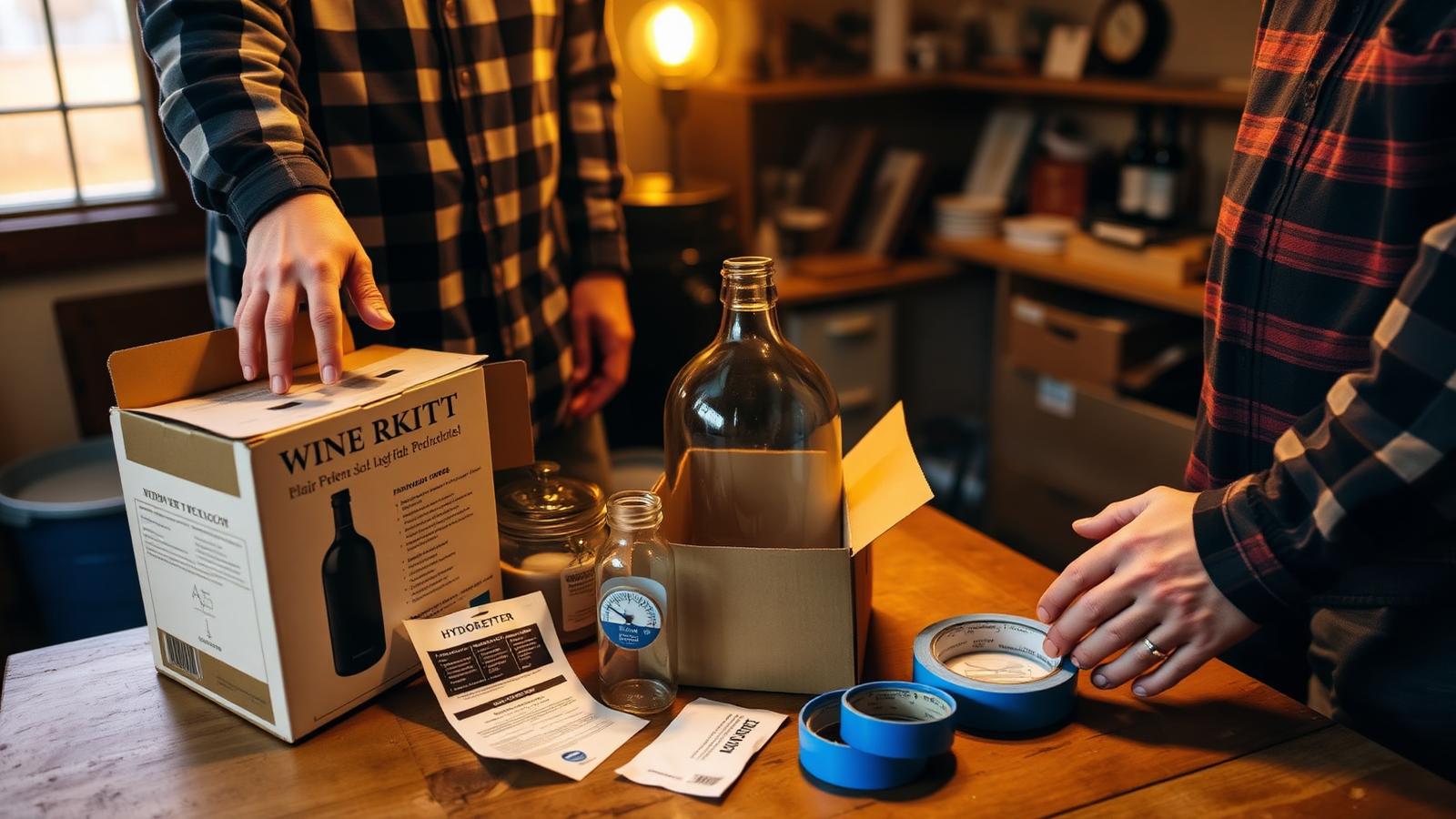
So you're thinking about ordering a wine kit. Maybe somebody gave you the idea, maybe you saw one at a store and got curious, maybe you've just been spending too much on grocery store wine and figured you could do it yourself. Whatever it is, we wrote this for you — because when we ordered our first kit ten years ago, we made every dumb beginner mistake there is, and most of them came down to nobody telling us the basics in plain English.
Here's what we wish someone had told us.
What's actually in the box
A wine kit is a bag of grape juice concentrate (sometimes with a small pouch of grape skins), four or five little packets of stuff you add at different stages — yeast, a clarifier, a stabilizer, maybe oak chips — and an instruction sheet. That's it. That's the kit.
Everything else — the bucket, the carboy, the airlock, the siphon, bottles, corks, the corker — is equipment, and most kits do not include any of it. Read the listing carefully before you buy. The first one we ordered, we sat there on a Saturday with a bag of juice and a packet of yeast and realized we had nothing to put it in. Don't be us.
What you actually need to buy (and what you don't)
Here is the honest gear list for batch number one. Get these and nothing else:
Buy these — and nothing else
- 6-gallon food-grade plastic bucket with a lid (your primary fermenter)
- 6-gallon glass or PET carboy (your secondary)
- Airlock + rubber stopper that fits the carboy
- Long plastic spoon
- Hydrometer + tall test jar
- Auto-siphon + ~6 ft of clear vinyl tubing
- Bottle brush
- Star San (no-rinse sanitizer)
- 30 empty wine bottles
- 30 #9 corks
- A corker (rent a floor corker if you can)
Total damage: somewhere around $150–$200 if you buy everything new, less if you find used carboys on Craigslist (people upgrade out of glass all the time). After this, the only recurring cost is the kit itself plus corks. The bucket and carboy will outlive you.
Skip these (for now)
- Refractometer
- pH meter
- Wine thief
- Fancy bottle tree
- Temperature-controlled fermentation chamber
- A second carboy "just in case"
- Any winemaking book longer than 50 pages
Buy that stuff later, after you've decided you actually want to keep doing this. We've made forty-plus batches and we still don't own half of it.
ShortcutSee Russ's full beginner supply bundle — every item, best price.One real recommendation on the corker: don't buy the cheap hand-held double-lever kind for your first batch. Either rent a floor corker from your local homebrew shop for the afternoon, or split the cost of one with a friend. The cheap ones work, technically, the same way a butter knife works as a screwdriver.
How the whole thing actually goes
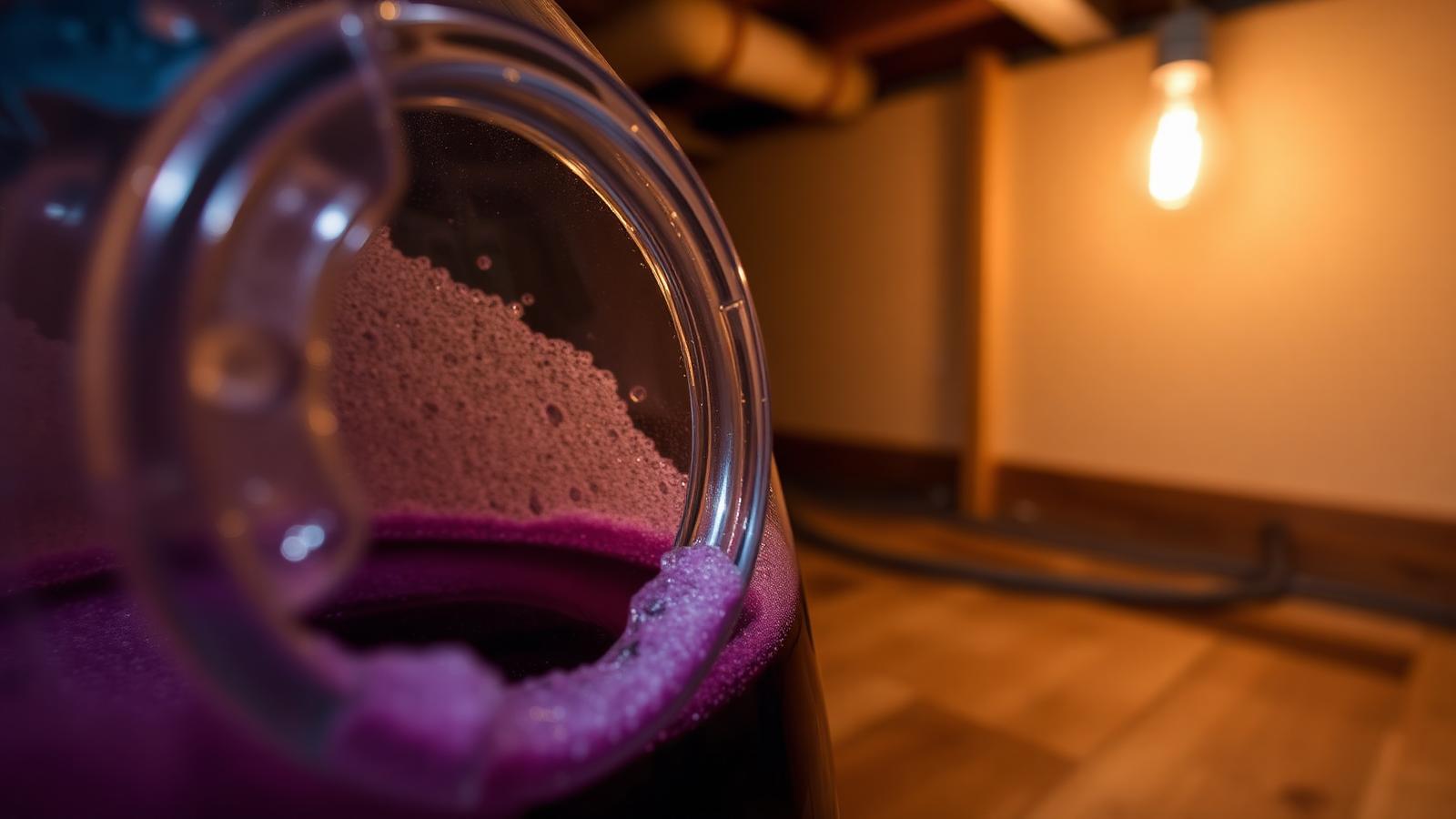
Strip away the instruction sheet and the process is six steps. Sanitize everything. Pour the juice in the bucket and pitch the yeast. Wait about a week while it bubbles. Siphon it into the carboy (this is called racking). Wait a few more weeks. Add the clarifying packets, wait a couple more weeks, then bottle it. Then wait at least another month before you open the first one.
Active hands-on time across the whole batch is maybe four hours, spread out over six to eight weeks. The rest is the wine sitting in your basement doing its job while you do other things.
The one thing you actually have to get right
Sanitize. That's it. If we could only give you one piece of advice, it would be: clean and sanitize every single thing that touches your wine, every single time. Buy a jug of Star San, mix it with water in a spray bottle, and use it relentlessly. The two batches we've ever ruined in ten years were both sanitization failures, and both tasted like wet cardboard. You learn fast.
Beyond that, the kit instructions are pretty hard to mess up. Follow them in order, hit the timing windows roughly (a day late is fine, a week late is fine, the wine is patient), and you'll end up with wine.
The hydrometer, briefly
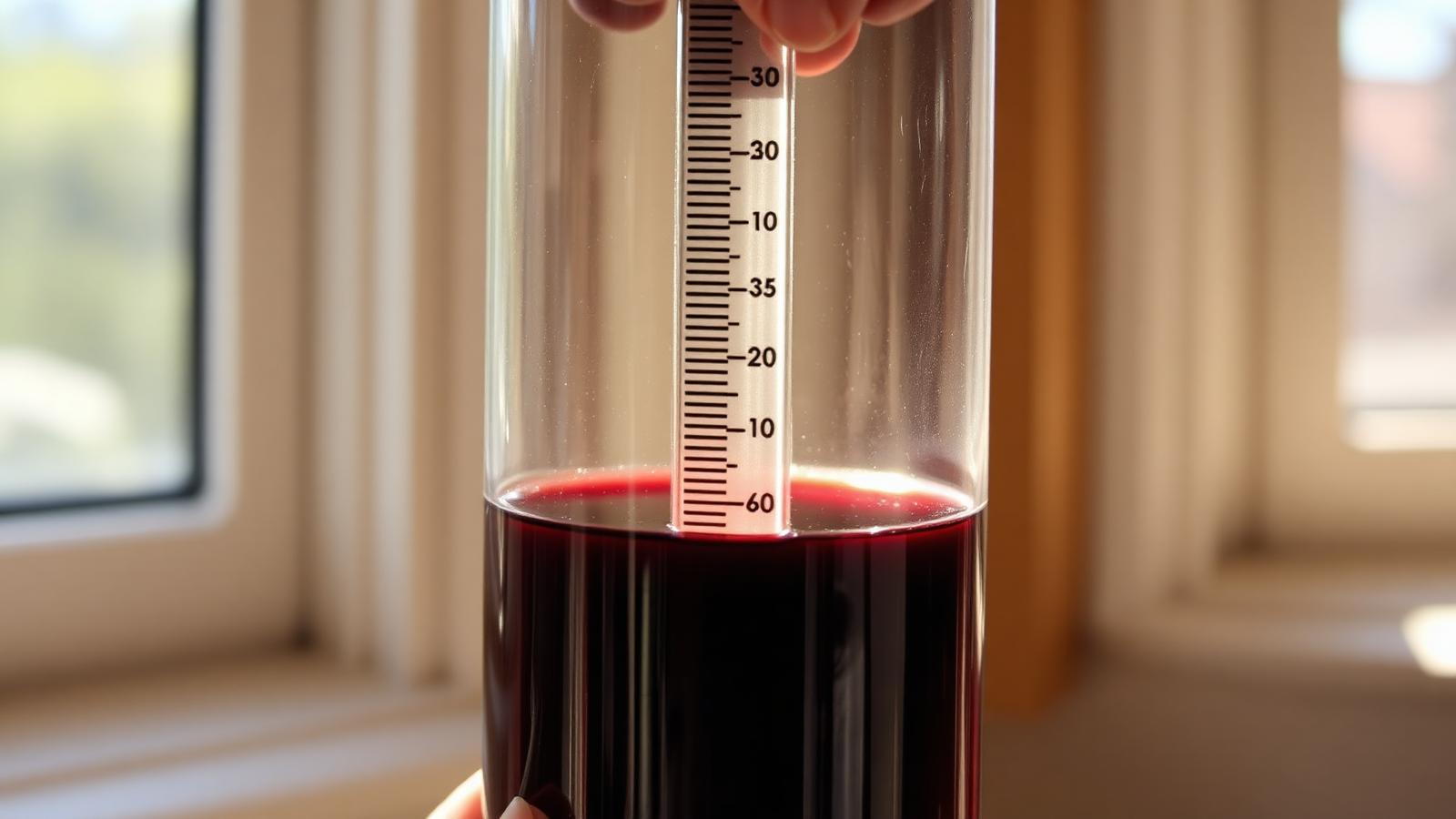
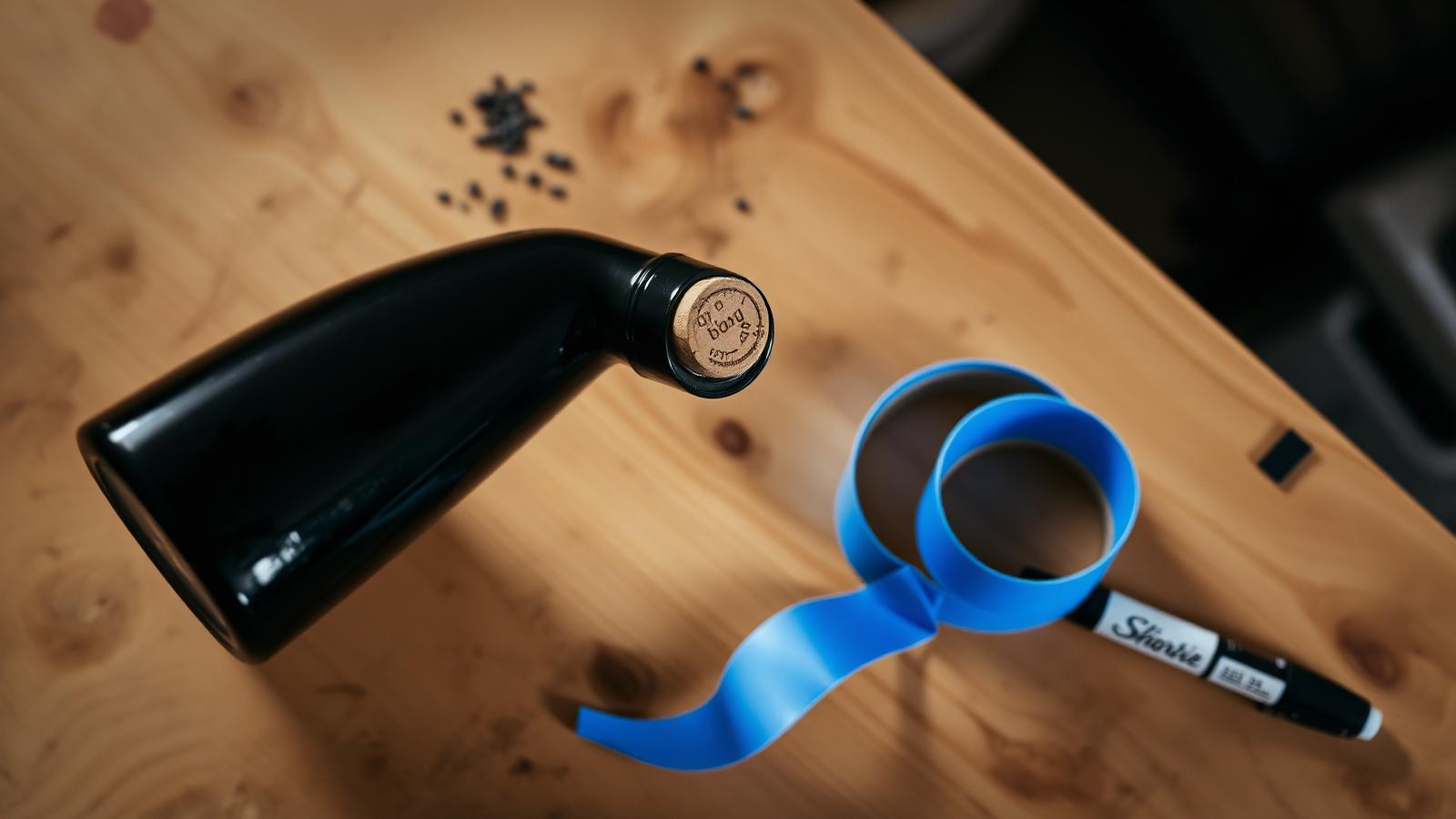
The kit will tell you to use a hydrometer. People online will make this sound complicated. It is not. It's a glass stick that floats in a sample of your wine and tells you how much sugar is left. You take a reading at the start, write the number down (we use blue tape on the carboy, naturally), and take another reading when the bubbling slows down. When it reads somewhere around 0.995–1.000, fermentation is done and you can move on. That's it. That's the whole skill.
Pick a kit you actually want to drink
This is the most common beginner mistake, and it's not even close. People walk into a shop, see a fancy-sounding Amarone or a Super Tuscan, get excited, and end up with thirty bottles of a wine they don't actually like. They drink it because they made it, not because they want to.
Don't do that. If you'd buy a Cabernet on a Tuesday night, make a Cabernet. If you drink Pinot Grigio in the summer, make a Pinot Grigio. The right first kit is the one whose finished bottle you'll be happy to pour at 6 p.m. on a random weekday. We started with a Cabernet for exactly this reason and ten years later we still make one every winter.
Kits run roughly $80–$180. The cheaper ones (4-week kits) are honestly fine for batch one — they're forgiving and they finish faster, which matters when you're impatient and curious. The pricier kits (6–8 weeks, with grape skins) make better wine but you should know if you like the process before you spend that much.
What batch one will actually taste like
Probably better than you're afraid of, probably not as good as it'll get. Kit wine done carefully lands somewhere around a perfectly drinkable midweek bottle from the grocery store. Not the bottle you bring to a dinner party to impress someone. The bottle you'd open on a Wednesday with pasta. That's a real, achievable result for a first try.
Open one as soon as the kit says you can. Open another a month later. Open another three months after that. The wine will change — usually for the better. Somewhere around month three you'll take a sip and notice it's actually pretty good, and that's the moment.
If you only remember three things
Sanitize obsessively. Don't buy gear you don't need yet. Pick a kit you'd actually want to drink. Do those three things and your first batch will be good. That's it — that's the whole guide. Go order something.