September 14, 2025 · 9 min read
How a roll of blue painters tape, a sharpie, and Russ's questionable handwriting accidentally became a brand.
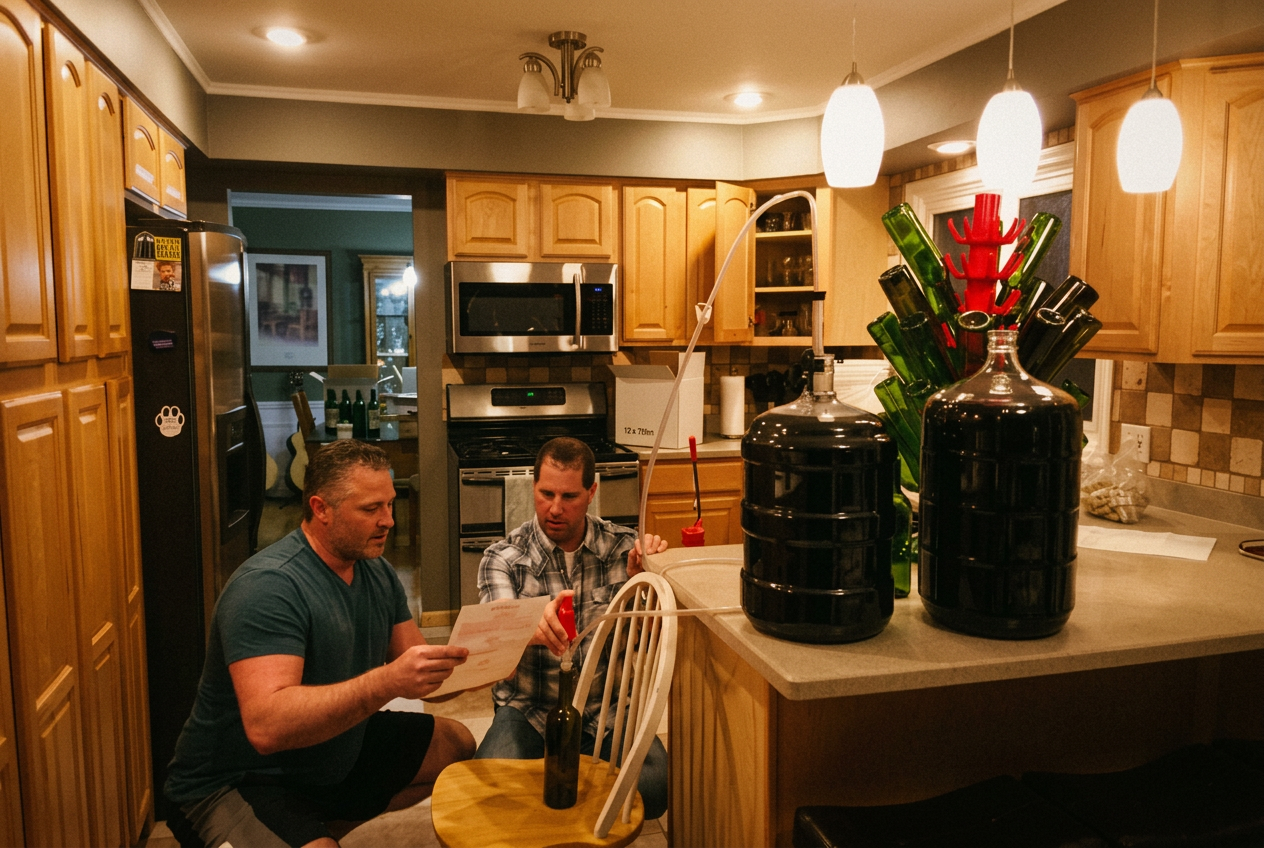
We had thirty bottles of Cabernet sitting on Russ's workbench and not one printed label between us. The wine was good. The wine was actually really good. The bottles looked like they had escaped from a hostage situation.
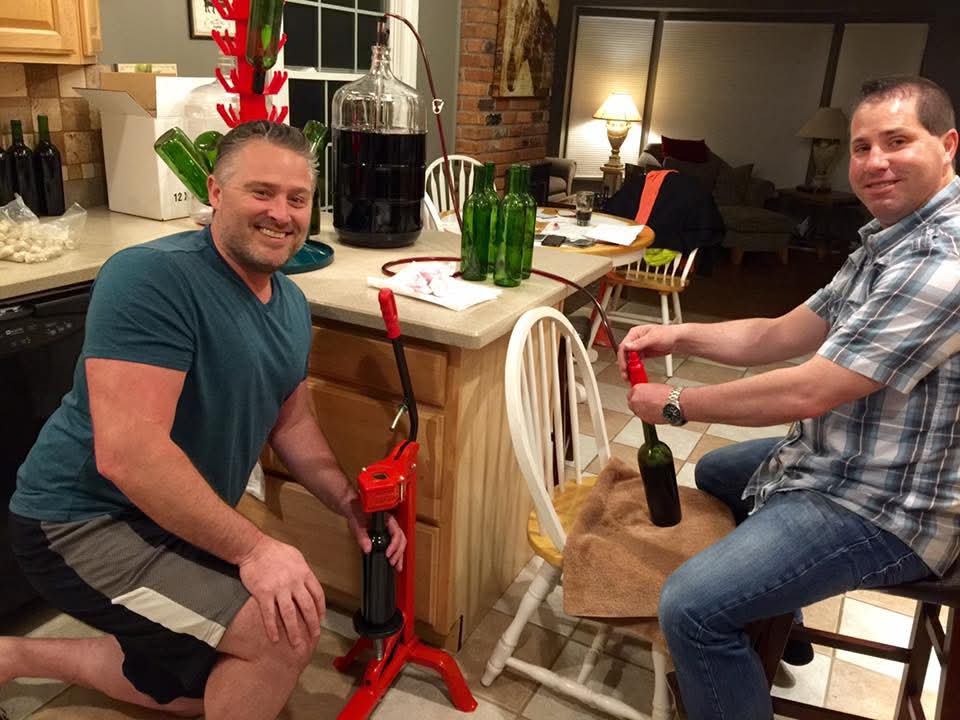
We had spent the better part of a Saturday racking, corking, and arguing about whether the corker was on its last legs (it was). By the time the last bottle was sealed it was already dark out, and we were both leaning against the workbench drinking the half-bottle that didn't quite fill, congratulating ourselves on a batch we genuinely could not believe we had made.
A Saturday that was supposed to be simple
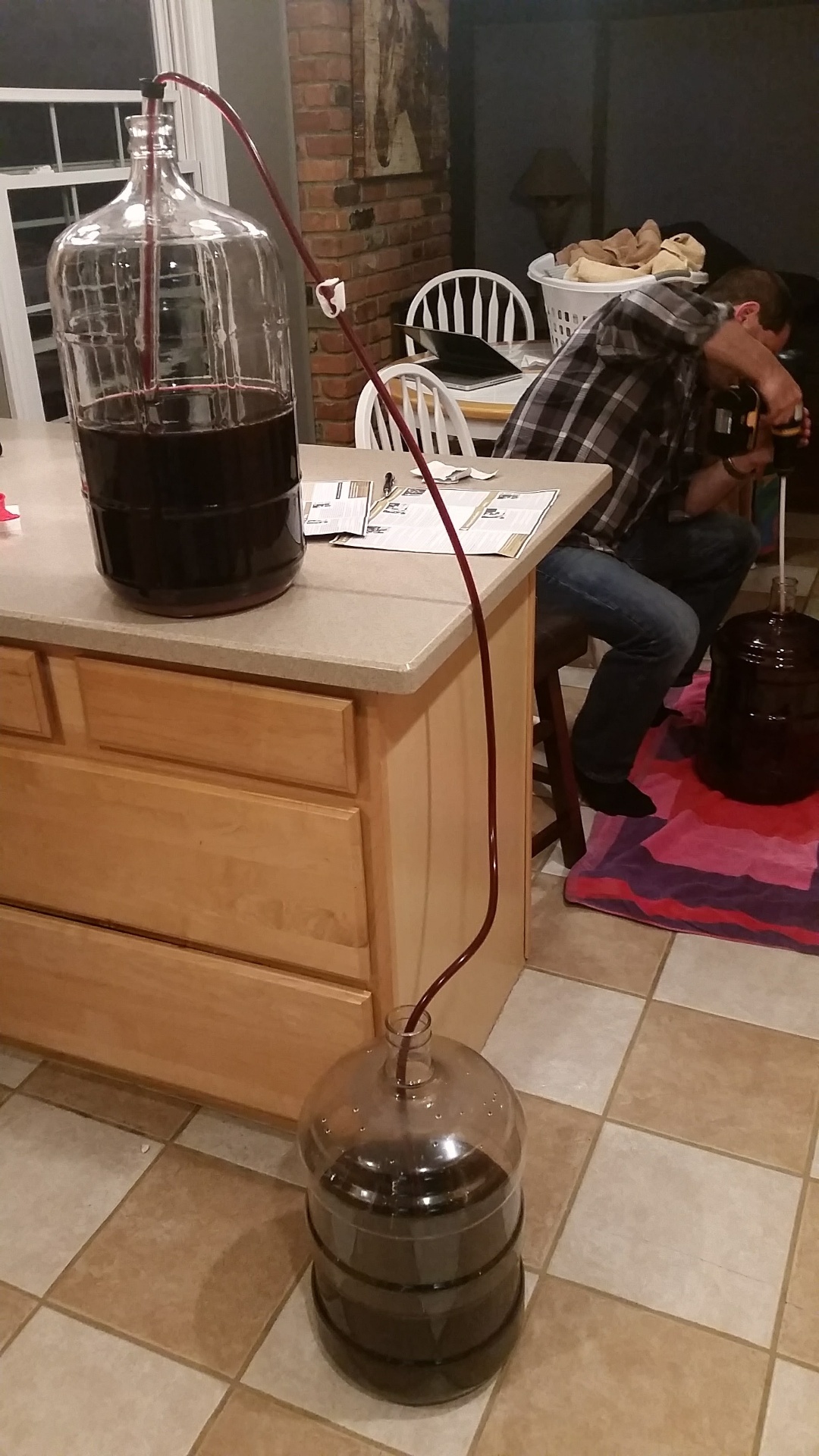
The plan, written down somewhere on a napkin neither of us can find now, was that bottling would take about two hours. We had done the math. Thirty bottles. Sanitize, siphon, cork, done. Be home in time for dinner. Maybe even take a walk.
What actually happened was four hours, two trips to the hardware store, one entirely unnecessary debate about whether a hand corker counts as a tool or a punishment, and a small flood by the utility sink that we have agreed to never speak of again. The wine, somehow, did not care. The wine just sat in the carboy being patient while we worked out our personal issues with gravity.
And then we looked at the bottles. Thirty unlabeled, identical, slightly menacing dark glass soldiers lined up on the bench. No vintage. No varietal. No indication that they were even wine, as opposed to, say, motor oil we had decanted for some reason.
“It looked less like a wine cellar and more like the opening shot of a true-crime documentary.”
Russ disappeared into the garage. I assumed he was going to find printer paper, or one of those proper wine-label kits with the perforations and the little wheat-stalk illustrations. He came back with a roll of bright blue painters tape and a black sharpie.
He tore off a strip, slapped it across the first bottle, and in the kind of block letters that look like they were written on a moving train, wrote two words: BACKUP WINE.
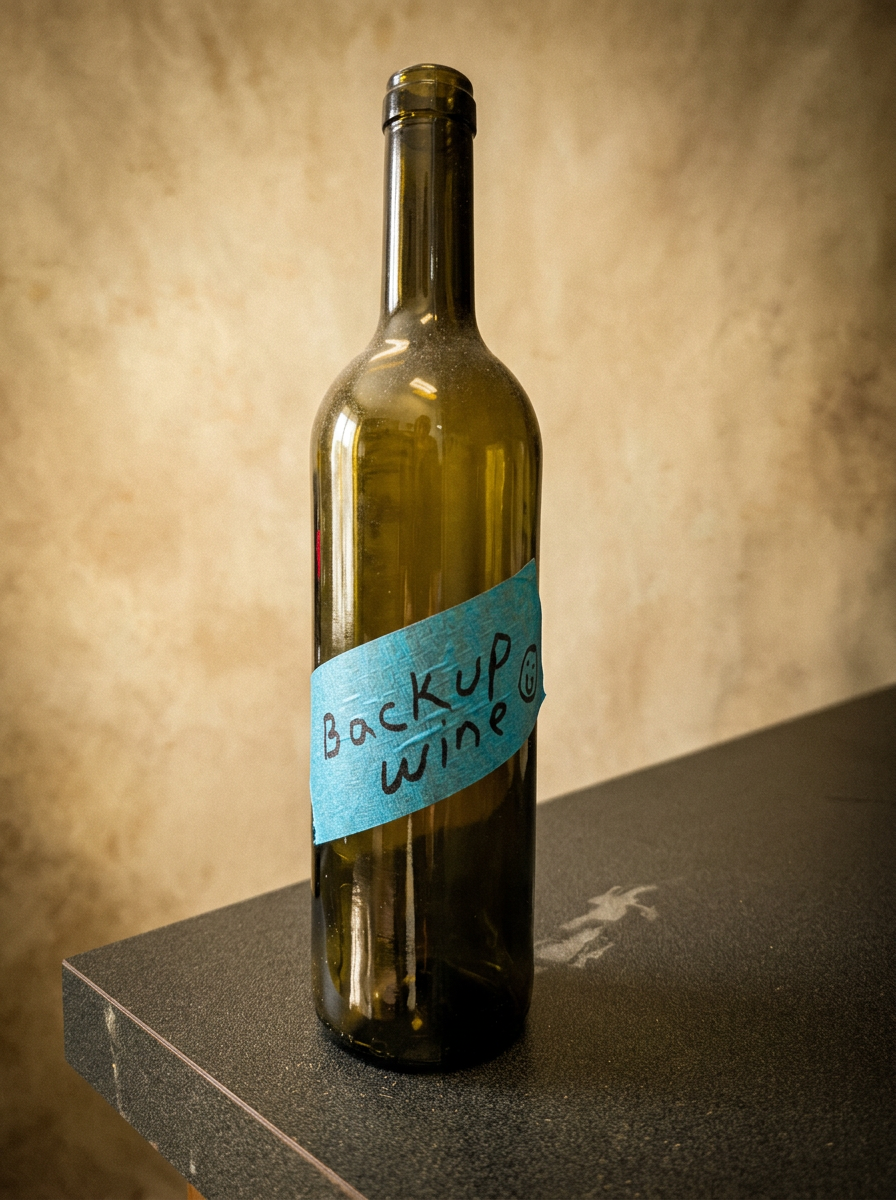
I asked what that meant. He looked at me like I was the slow one in this scenario, and said, "It means if your real wine runs out, this is what you drink." Then he laughed at his own joke for about a minute and a half.
“It means if your real wine runs out, this is what you drink.”
Twenty-nine more, all by hand
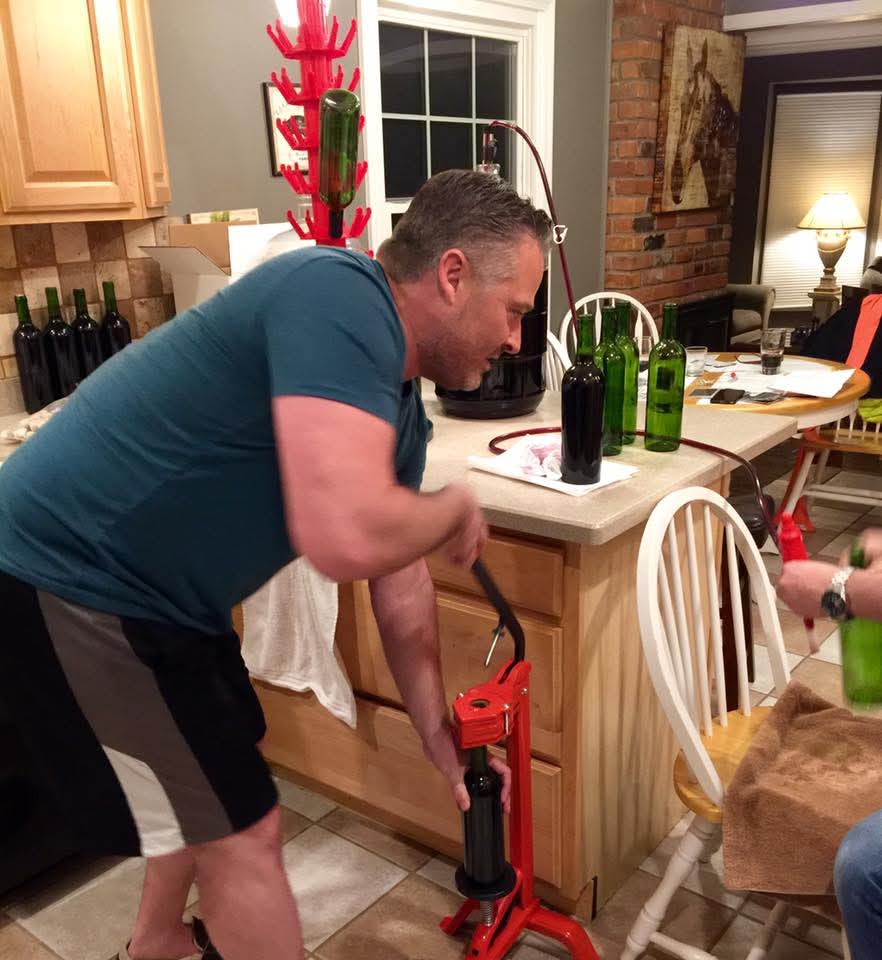
Once Russ had labeled the first one, there was no going back. You can't have one bottle of BACKUP WINE and twenty-nine bottles of nothing — that's not a batch, that's a typo. So we set up a little assembly line. He tore the tape. I held the bottle. He wrote. I rotated the bottle a quarter-turn so the label sat where a real label would sit, because somewhere in the back of my brain a small, polite voice was still trying to make this dignified.
Somewhere around bottle number twelve, Russ started getting creative. One bottle got a little smiley face after the words. Another said BACKUP WINE (THE GOOD ONE). Bottle nineteen, for reasons we have never been able to reconstruct, simply said FOR EMERGENCIES. We left them all. They are, to this day, the only bottles in the original batch that didn't match, and they are also, somehow, the ones we still talk about.
“If we ever try to make this look fancy, remind me about bottle nineteen.”
When we were done, we lined them all up. Thirty bottles, thirty strips of blue tape, thirty slightly different versions of the same two words. It looked, against every reasonable expectation, like a brand. A weird brand. A brand a couple of guys would invent in a garage. But a brand.
The part where the joke became the name
I want to tell you I argued. I want to tell you I held out for something more dignified — a real label, an actual font, a tasteful little drawing of a vine. I did not. We labeled all thirty bottles that way, and within twenty minutes the joke had stopped being a joke and started being the name of the wine.
The first time we opened one for somebody else was about a week later. A neighbor came over to borrow a level — Russ has every level ever manufactured — and ended up staying for dinner, because that's how things go at Russ's house. We pulled a bottle off the shelf, he looked at the label, he laughed, and then he tasted it and stopped laughing in a very specific way that we have since learned to recognize.
“Wait. Wait. You guys MADE this? In the garage? I owe you both an apology.”
That happened, in some form or another, every single time. Somebody would see the tape, decide we were idiots, taste the wine, and then revise the entire interaction in real time on their face. After about the tenth time, Russ looked at me across the kitchen and said, very quietly, "I think the tape is doing a lot of the work, actually." And he was right. The tape set the bar so low that anything above truck-stop merlot felt like a small miracle.
Six months later we were still drinking it, still calling it Backup Wine, and the few bottles we gave away as gifts came back in the form of texts that all said roughly the same thing: "This is way better than it has any right to be. What is it actually called?" The answer, by then, was obvious.
Somewhere along the line we stopped writing it as a joke and started writing it because it was, factually, what the wine was called. Now there is a website. There is a logo someone designed that looks suspiciously like a strip of blue tape. There is, I am told, a brand.
What the tape actually meant
I have thought about this more than I should, in the years since. Why did the tape work? It is, after all, just tape. The wine would have been the same wine inside a fancy embossed label with a foil-stamped vineyard scene. Probably better-looking on a shelf. Definitely more impressive at a dinner party.
But I think the tape is the whole point. The tape said: we are not pretending. We are not asking you to take this seriously before you have tried it. We are not selling you a story about a chateau in France or a fifth-generation winemaker with a leathery face and a meaningful pause. We are two guys. This is what we made. If you like it, great. If you don't, there's beer in the fridge.
“The label sets the expectation. We just decided to set ours on the floor and let the wine do the talking.”
Every batch since has been labeled the same way. We have made nicer-looking labels. We have, more than once, sat down at the computer and tried to design something proper. Every time, one of us looks at the other and says some version of, "Yeah, but the tape, though." And then we go back to the tape.
All from a roll of painters tape Russ already had in the garage for an entirely different reason. Which, in retrospect, is the most on-brand origin story we could have asked for.
Russ, by the way, still won't tell me what the original reason was. He says it doesn't matter. He says the tape was always going to end up here. I am not sure I believe him, but I am sure I am not going to win that argument, and at this point I am also not sure I want to.